Blog Archive

Showing posts with label catholic. Show all posts

Tuesday, February 8, 2022

RCC

  To deny that Roman Catholicism is a cult is to repudiate the reformation and mock the millions of martyrs who died at Rome's hands. The "Christ" of Roman Catholicism is just as false as its "Mary." Remember that a cult according to the Word of God is any group of people that worship anything or anyone other than Jesus Christ, and believe anything contrary to His word as recorded in the Bible.  Roman Catholicism is not truly Christian, but is in fact an offshoot of Christianity and the largest and oldest "Christian" cult in the world. In addition, the display of adoration, the gaudy parade of a mere man as if he were a god, the pandering to idolatrous worship through bowing down and kissing his ring, the insistence that he be addressed as "His Holiness the Pope" or "Father" of all Christians cannot but confirm to any Christian that the Roman Catholic church is a cult.

Sunday, August 29, 2021

Mary worship

When Rome went from being pagan to Christian under Constantine, they had to find a replacement for the great mother of paganism. It was not until the time of Constantine that anyone began to look at Mary as a goddess. Since Mary was the mother of Jesus Christ, she was the most logical person to replace the pagan mother goddess. The pagans could continue their prayers and devotion to the mother goddess, only they would call her Mary. The pagans worshipped the mother as much or more than her son. True Christianity teaches that Jesus Christ is to be worshipped – not his mother. The fact remains that Jesus never hinted at the idea of Mary worship nor did any of the apostles.  Worshipping the mother goddess along with her child took place centuries before Jesus Christ was ever born in many different parts of the world. In 431 A.D. Mary worship became an official doctrine of the church in at the Council of Ephesus. 

Monday, August 17, 2020

Idols

In the book of Ezekiel, Ch 8, the prophet is taken into the house of God where he sees the elders of the house of Israel worshiping and praying to various carved idols. The Lord proclaimed judgment on his own house because of the detestable acts that were taking place within the temple walls. He sealed his own, the ones who “sighed and groaned over the detestable practices committed” in the temple, so that they might be spared. He then commanded that the temple be completely defiled and the courts filled with the slain.
Be careful not to be found mourning for the idols as God’s wrath is poured out. There is no such thing as a “Christian idol”. God clearly prohibited this practice from the very beginning.
Exodus 20:4-6
“Thou shalt not make unto thee any graven image or any likeness of anything that is in heaven above, or that is in the earth beneath, or that is in the water under the earth.
Thou shalt not bow down thyself to them, nor serve them: for I the Lord thy God am a jealous God, visiting the iniquity of the fathers upon the children unto the third and fourth generation of them that hate me;
And shewing mercy unto thousands of them that love me and keep my commandments.”

Thursday, August 1, 2019

Demon infestation

Infestation means to inhabit or overrun in numbers large enough to be harmful or threatening.  Demons are real (James 2:19;4:7; Job 4:15; Luke 8:2; Luke 8:30; Mark 3:11; Mark 9:29; Matthew 8:29; Matthew 12:43-45). 
This seems to be a bad problem in the Catholic Church because they have incorporated many pagan practices into the Christian religion. It is especially bad in Asian countries because they have added many superstitions to it. So it is no surprise that Demonic possession is so prevalent. People's mind's are open to it the Catholic Church. 
A true Christian cannot be Demon possessed because they have the Holy Spirit dwelling within them (2 Corinthians 1:22; 5:5; 1 Corinthians 6:19).

Sunday, July 28, 2019

Is religion - the opium of the masses - the most dangerous drug in the Philippines?
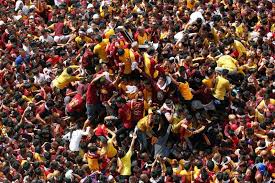
Is religion - the opium of the masses - the most dangerous drug in the Philippines?
                                                                                      When Duterte rode in on his white horse declaring “drugs are the problem”, the people jumped all over it. Just as Hitler had the Jews to blame, pointing the finger at an enemy within while the rich continue to get richer isn’t something new — it’s fascism 101.

Saturday, September 22, 2018

Vatican city

The unique, noncommercial economy of Vatican City is supported financially by contributions (known as Peter's Pence) from Roman Catholics throughout the world, the sale of postage stamps and tourist mementos, fees for admission to museums, and the sale of publications.

Sunday, July 1, 2018

Catholic

In the Catholic Church, many extra-biblical practices have been added that create a different religion out of Christianity. While those who consider themselves Catholic can also be truly born again, one does not inherit eternal life by being a good Catholic (Titus 3:5–7). One can be a Christian in spite of being Catholic, just as one can be a Christian in spite of church attendance of any kind. However, Catholic teaching has gone far awry from strict adherence to the Bible, adding human ideas and “teaching as doctrines the commandments of men” (Mark 7:7). The Pharisees of Jesus’ day had done the same thing with God’s Law, and it appears that Catholic tradition follows more closely in the footsteps of the Pharisees than those of the apostles

Tuesday, December 5, 2017

Catholic religion

Catholics approach God by confessing their sins to a priest. The Bible says that we can approach God himself (Hebrews 4:16). The Bible is clear that God wants us to pray to him, to communicate with Him, and ask Him for the things we need (Philippians 4:6; Matthew 7:7-8; 1 John 5:14-15). There is no need for mediators (priest) or intermediaries such as Mary or saints. Christ is the one and only mediator between God and mankind (1Timothy 2:5). Both Christ and the Holy Spirit are interceding on our behalf (Romans 8:26-27; Hebrews 7:25). 

Saturday, November 11, 2017

Christian 500 years ago

Here is what it was like to be a believing Christian five hundred years ago. The church did teach that Jesus Christ, the incarnate Son of God, bore the punishment for our sins and died for the forgiveness of our sins. It taught that the redemption that Christ won had to be dispensed by the church.
What this meant in practice was that Christ’s death, applied through baptism, was thought to free us from original sin. Sins committed after baptism had to be dealt with in a different manner. The Roman Catholic Church still teaches that Christians can be damned if they commit mortal sins. But these can be forgiven if the sinner feels contrition, confesses them to a priest, performs an act of penance, and receives absolution. Thus, the sins are forgiven, in the sense that they no longer will incur eternal punishment. But they will still incur temporal punishment.
This happens in purgatory. After death, Christians must be punished for the sins they committed on earth. This is necessary before the Christian may enter heaven.  Purgatory was a realm of fire. Sinners burn in purgatory, much as they would in hell, though these pains are only temporary. But suffering the fires of purgatory might last thousands of years.
This is what believing Christians have to endure, for sins for which they have repented and found forgiveness, that the church admits were atoned for by Christ, and that were confessed and absolved.
But God, by His grace, can reduce this time, the Roman Catholic Church says. This is why we must pray for the dead, that God would remit their penalty. Also, the church can reduce this time by means of the “treasury of merit.” The saints—defined as someone found to be already in heaven, their time shortened by God’s special grace and the holiness of their lives—have more merit than they need to enter heaven. So the church can transfer that extra merit to living Christians or to the dead already in purgatory. These are indulgences.
The church granted—and still grants—indulgences for various acts of devotion, such as venerating relics or going on a pilgrimage. And then, at the start of the Reformation, the pope was selling them.
Imagine the horror of believing that after death, for all of your piety, you would experience thousands of years of penitential fire. But imagine the relief if for a week’s wages2 you could buy a plenary or complete indulgence and go straight to heaven. And if you could raise another week’s wages, you could free your dead child.